Over Mother’s Day last month, I spent some time thinking about the beginning of my life, which started in an orphanage. Below is a photo of the moments before I boarded my very first international plane flight with my (adoptive) mum.

In Post #3, I discussed operationalizing empathy – this is my mother doing exactly that in a major way. Everything I learned about equity growing up, I learned from my mum, who spent 30 years taking care of children with special needs. Today, I want to highlight just a few, yet fundamental equity terms to help put into context the diverse experiences of different communities, no matter where we are in the world.
In your daily life, you might have seen the following terms being used – priority populations, vulnerable populations, underrepresented communities, underserved communities, disadvantaged communities, and marginalized communities. There is a lot of conversation right now about how AI and emerging technology will impact these groups of people, but who exactly are these groups of people? Through my work in equity, I deal with these terms every day.
Please keep in mind that the terminology around equity and inclusion is dynamic and evolves as societal contexts change and our collective understanding deepens. Ideally, terms should be regularly re-evaluated to better reflect the nuances of experience and identity. This ensures they are used in ways that are both respectful and accurately descriptive. There are, of course, iterations of the terms I have highlighted below. However, one of the purposes of highlighting these terms is to raise awareness of the populations who must be considered in the development of emerging tech and AI because understanding these evolving terms helps foster empathy and action.
Let’s see if I can clarify them for you.

A Few Equity Terms
Priority Populations – Groups needing focused attention due to critical health, social, or economic needs. Think of Indigenous communities, children with special needs, or elderly individuals.
Vulnerable Populations – People at higher risk of poor outcomes due to their circumstances. This includes unhoused individuals, refugees, and those with chronic illnesses.
Underserved Communities – Areas lacking essential services like healthcare and education. Examples are rural communities, low-income urban areas, and people living with disabilities.
Disadvantaged Communities – Groups facing barriers that limit opportunities, like low-income families, single-parent households, and communities with high unemployment rates.
Underrepresented/Underrecognized Communities – Groups often overlooked or inadequately represented in decision-making processes, for example, certain minority ethnic groups, women in STEM, and small social impact brands.
Marginalized Communities – Those who have been pushed to the edges of society and face discrimination and exclusion, such as LGBTQ+ individuals, minoritiy ethnic groups, and people living with disabilities.
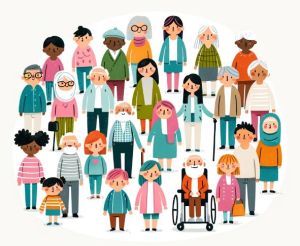
It is important to note that many populations can fit into multiple categories simultaneously. For example, an Indigenous community might be considered both underserved and marginalized. Recognizing these overlaps is crucial for understanding the complexity of these issues and addressing the needs of these populations effectively.
At the same time, some populations and needs are universal. Groups such as orphans and children in foster care, low-income families, and people with special needs exist in every country and share common challenges. Universal needs include access to clean water, healthcare, education, and economic opportunities. Remember Post #3 on Maslow’s Hierarchy of Needs?
Finally, every country has its own unique priority, vulnerable, underrepresented, underserved, disadvantaged, and marginalized communities, each with specific needs that vary based on local contexts, cultures, and resources. Single mothers in New Zealand may have different needs compared to single mothers in Nigeria, yet both groups could potentially face significant challenges in accessing childcare and economic opportunities. Low-income families in Germany might have different needs compared to those in Italy, yet both could struggle with affordable housing and healthcare access. Indigenous populations in the United States face different challenges than indigenous populations in Australia, yet both deal with historical biases and ongoing marginalization.

I realize there is a lot of information here to absorb, but accurately defining and identifying these populations is crucial not only for operational and policy reasons, but because the data we gather informs the development and application of emerging technologies and AI. Of course, I will be talking more about all of that in future posts. The goal is to significantly improve the quality of life for vulnerable populations worldwide and by default for everyone and we can only address these needs through equitable policies and practices informed by good data.
So, I encourage you all to look up these terms for your respective countries and different languages and actively initiate and engage in conversations about their impact – on everyday life, policy-making, and especially on the people being discussed who are being defined in these population groupings. Get into it. Don’t be afraid to ask difficult but potentially illuminating and revelatory questions. This is a way we can all operationalize our empathy and collectively work towards a more inclusive future where AI innovation benefits everyone.

#Fairness #AI #Equity #TheGlobalFAIRSpace #Equity #AIandEquity #prioritypopulations #marginalizedcommunities #operationalizeempathy #policymaking #emergingtechnology #socialjustice #publicpolicy
*All images not photos in this post generated by Natasha J. Stillman and ChatGPT-4o (DALLE-3)


 The Global FAIR Space Blog
Leave a reply to N. Stillman Cancel reply